
A kite formation gets a lot of headlines for something most people have never actually seen in a chart. The pattern usually arrives wrapped in a promise: name a date, name a few lucky signs, and tell everyone else to hope theirs is on the list. It makes for a tidy story, and it almost never holds up. A kite formation in astrology is real, and it does carry a recognizable quality — but it works far better as a prompt for reflection than as a forecast of luck dropping on a particular Tuesday. Read that way, the same pattern that gets sold as a windfall becomes something more useful: a picture of how flowing talent finds a point of focus, and an invitation to notice where that’s true in your own life.
None of what follows is a prediction. Think of it as a way to understand what this configuration actually is, so you can recognize it and work with it rather than wait for it to hand you something. Here’s what a kite formation means, why the “four lucky signs on a date” framing misses the point, and how to treat one as reflection when it shows up.
What a Kite Formation Actually Is
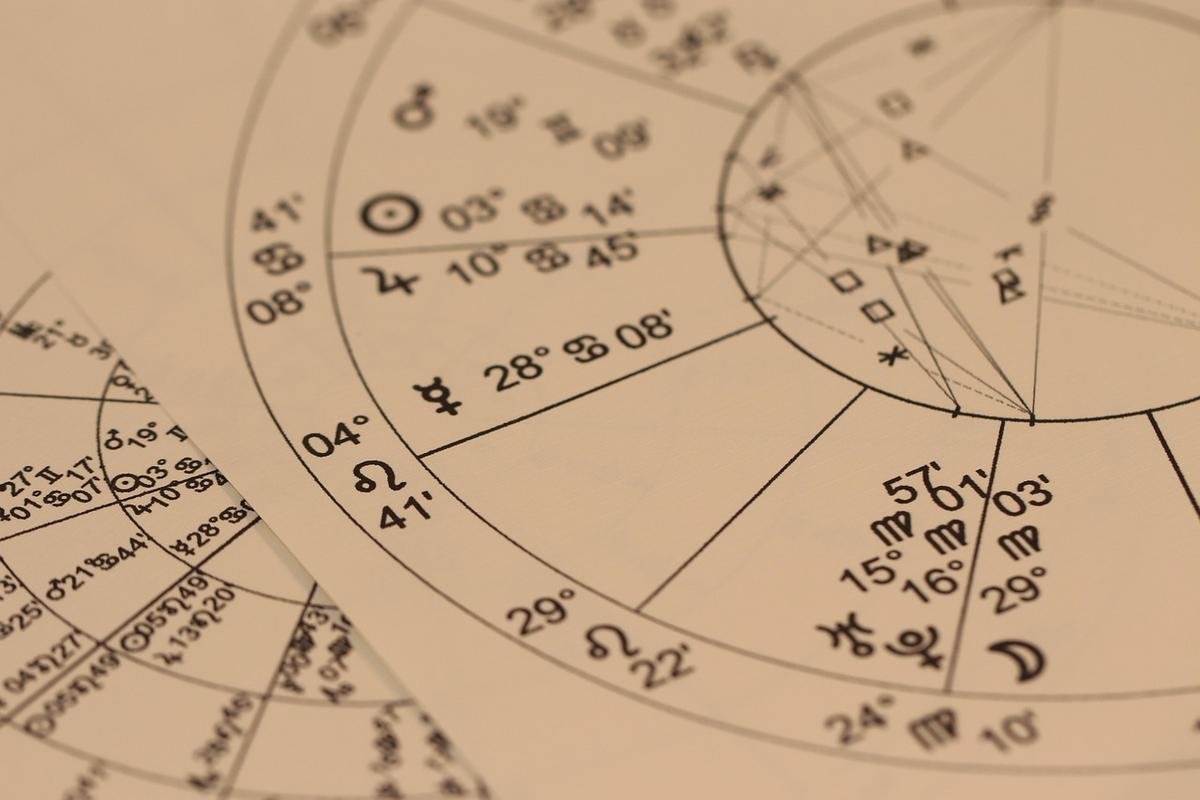
A kite is what astrologers call a chart pattern — a shape made by several planets sitting at particular angles to one another. Picture the children’s toy and you’ve basically got it: a long diamond with a tail. The pattern is built from two pieces. First, a grand trine: three planets spaced evenly around the chart, each roughly 120 degrees from the next, forming a balanced triangle. Then a fourth planet that sits opposite one of those three points, about 180 degrees away, completing the kite’s long axis.
That fourth planet is the whole reason the pattern has a name of its own. On its own, a grand trine is famously easy and famously a little aimless. The opposing planet gives the shape a point to push against — a tail that lets the kite actually catch the wind instead of drifting. So a kite is really a grand trine that’s been handed a direction. It’s worth saying plainly, though, that the pattern doesn’t make anything happen. It describes a quality of flow with a built-in focus; what you do with that focus is still entirely yours.
The Grand Trine at Its Heart
To read a kite, it helps to understand the triangle it’s built on. A trine is an aspect — a specific angle between two planets, about 120 degrees — and it’s considered one of the easy, flowing ones, where two planetary energies cooperate rather than grate. A grand trine links three planets that way, usually in the same element, so the whole circuit hums along with very little friction. If you’ve ever had a skill that came so naturally you barely noticed it, that’s the grand trine feeling: genuine ease that can quietly turn into “why bother trying.”
That’s the catch the kite is built to solve. Pure ease, left alone, tends to stay potential rather than become anything. The opposition in a kite interrupts the comfortable loop and asks the flowing energy to point somewhere. This is exactly why the reflective frame fits this pattern so well: a kite isn’t a delivery of good fortune, it’s a diagram of talent that finally has a reason to move. If you want a gentler walk through how a single flowing aspect works before tackling the whole configuration, our reflective look at what a Moon–Mars trine actually means covers the basic building block.
Why “Four Lucky Signs on a Date” Misses the Point
So where does the windfall story come from? A kite looks impressive on paper, abundance content loves a dramatic-sounding pattern, and “flowing energy with a focus” gets translated straight into “money and luck are coming.” But a chart pattern can’t promise an outcome, and Abundance Astrology won’t pretend otherwise. Astrology here is a lens for reflection, never advice about your money — a kite forming in the sky is not a reason to make a purchase, a trade, or a financial decision you wouldn’t otherwise make.
What’s fair to say is quieter and more honest. If a kite genuinely does describe a window where some natural strength of yours has a clear outlet, you might find it a steadier moment to take a considered step you’d been circling — to use the talent that comes easily on the goal that actually matters. Any benefit that follows comes from your action during a supportive window, not from the sky paying out. That distinction — between a pattern that nudges your behavior and a pattern that produces a result — is the whole difference between reflection and prediction.
It’s About Your Whole Chart, Not a Headline
The clickbait version of a kite usually names a short list of signs and tells everyone else better luck next time. The tradition is more layered than that. A pattern forming in the sky makes contact with your whole birth chart, not just your Sun sign, so whether a passing kite lands meaningfully for you depends on where those planets fall in relation to your personal placements — not on your year’s horoscope column. Some people even carry a kite as a permanent feature of their natal chart, a standing pattern they grow into over a lifetime rather than a one-day event.
This is freeing rather than discouraging. A pattern described as lucky for a few signs isn’t a velvet rope keeping the rest of us out; it’s a note about a particular quality of flow that’s available, and any of us can choose to lean into it. Rather than asking “is this my lucky pattern or not,” the more useful question is “what’s being highlighted right now, and does it match something I was already trying to do?” If charts and houses still feel like a foreign language, our complete beginner’s guide to abundance astrology is a good place to get your bearings before you go pattern-hunting.
Working With a Kite as Reflection
So what do you actually do when a kite is in the air, or when you find one in your own chart? The reflective approach is almost boringly practical, and that’s its strength. Because a kite pairs natural ease with a clear point of focus, it’s a sensible prompt to ask where your easy strengths are currently going to waste — and to aim one of them, on purpose, at something you care about. The energy described here is cooperative; the work is deciding where to send it.
It also helps to notice what this pattern is not for. The grand-trine ease at a kite’s center can tip into coasting, and the opposition can feel like pressure if you read it as a demand rather than an invitation. So a kite is a poor excuse to either drift on autopilot or force a dramatic leap you’d regret — not because something bad is fated, but because you’d be spending real momentum on the wrong thing. A short, intentional practice can help you point the energy deliberately; our rituals to clear abundance blocks are built for exactly that “I have flow, where do I direct it” moment, and the same set-an-intention-then-act logic that suits lunar timing applies here too, as in our guide to harnessing lunar cycles for prosperity.
If you’d like a plain-language reference you can keep coming back to as you learn to spot patterns like this in a chart, a comprehensive beginner’s astrology book is genuinely useful here. Abundance Astrology may earn a small commission from purchases made through links in this post, at no extra cost to you. One clear, widely used option is The Only Astrology Book You’ll Ever Need by Joanna Martine Woolfolk, which walks through signs, houses, and aspects in everyday language — handy if you want to find a grand trine or a kite in your own placements rather than wait for a horoscope column to mention one.
Keeping a Record of Your Own Timing
Here’s the practice that turns this from interesting trivia into something you can actually use: keep a light record. When you note what you did, decided, or noticed during the patterns and transits you paid attention to — and how it really went — you slowly build a personal map of your own timing that no generic “four lucky signs” list can give you. Over a few months you may find that certain configurations genuinely do suit you for certain kinds of action, and that knowledge is yours rather than borrowed from a headline.
The point isn’t that the pattern makes things happen. It’s that a named moment — a kite, a new moon, the start of a season — makes it far more likely that you’ll pause and choose, instead of reacting on autopilot. A few structured prompts can make the habit stick; our astrology journaling prompts for abundance give you a place to start, and you can fold whatever’s happening in the sky right into the same notebook.
Reflection Prompts to Sit With
Wherever the planets happen to be, these are worth a few quiet minutes:
- What is a strength that comes so easily to me that I tend to overlook it — and where is it currently going unused?
- If today’s energy were simply a suggestion about where to point my talent rather than a promise of what will happen, where would I aim it?
- What is one meaningful goal that my easiest abilities could actually serve, if I gave them a direction?
A kite formation isn’t a payout scheduled for four signs on a date, and it’s more interesting when it doesn’t have to be. Its quieter offer is better: a picture of flowing talent that finally has somewhere to go, and a nudge to ask where that’s true for you. Treat it as a prompt rather than a prediction, keep a light record of what you notice, and the real benefit tends to follow — not luck handed to you, but a growing sense of how to use what already comes naturally.